
This is a pipe
On the relationship between perception, existence, and reality


As a child, I was obsessed with understanding what in the Bible was real; I tried to find evidence of historical facts and proof of literal existence, e.g., did Adam and Eve really exist? Can someone survive in a whale for 3 days? Did Jesus Christ live as a person, and is there proof that he was resurrected 3 days later? As I’ve grown older, I’ve not only become less interested in these questions, but I’ve come to believe that existence is not a pre-requisite for reality.

Let’s start with a less controversial example than the Bible - let’s use the popular story Catcher in the Rye. The novel by J.D. Salinger exists - I’ve read it, as have countless young Americans due to US reading requirements. As with any fictitious tale, the character does not exist in the same sense that you or I do because the entire plot is a fabrication of J.D. Salinger’s mind. But Holden Caulfield is still real. We can imagine his red hunting cap, his cringe-worthy infantile narcissism, and even imagine the pain he felt losing his brother, Allie. Whether a story is a non-fiction biography or a fictional narrative, the impact of the story is often felt the same. The dogs dying at the end of Where the Red Fern Grows was not less sad to my elementary-self because the dogs did not exist; my perception, my internal understanding of the dogs, was entirely real - and made me cry in 2nd grade.
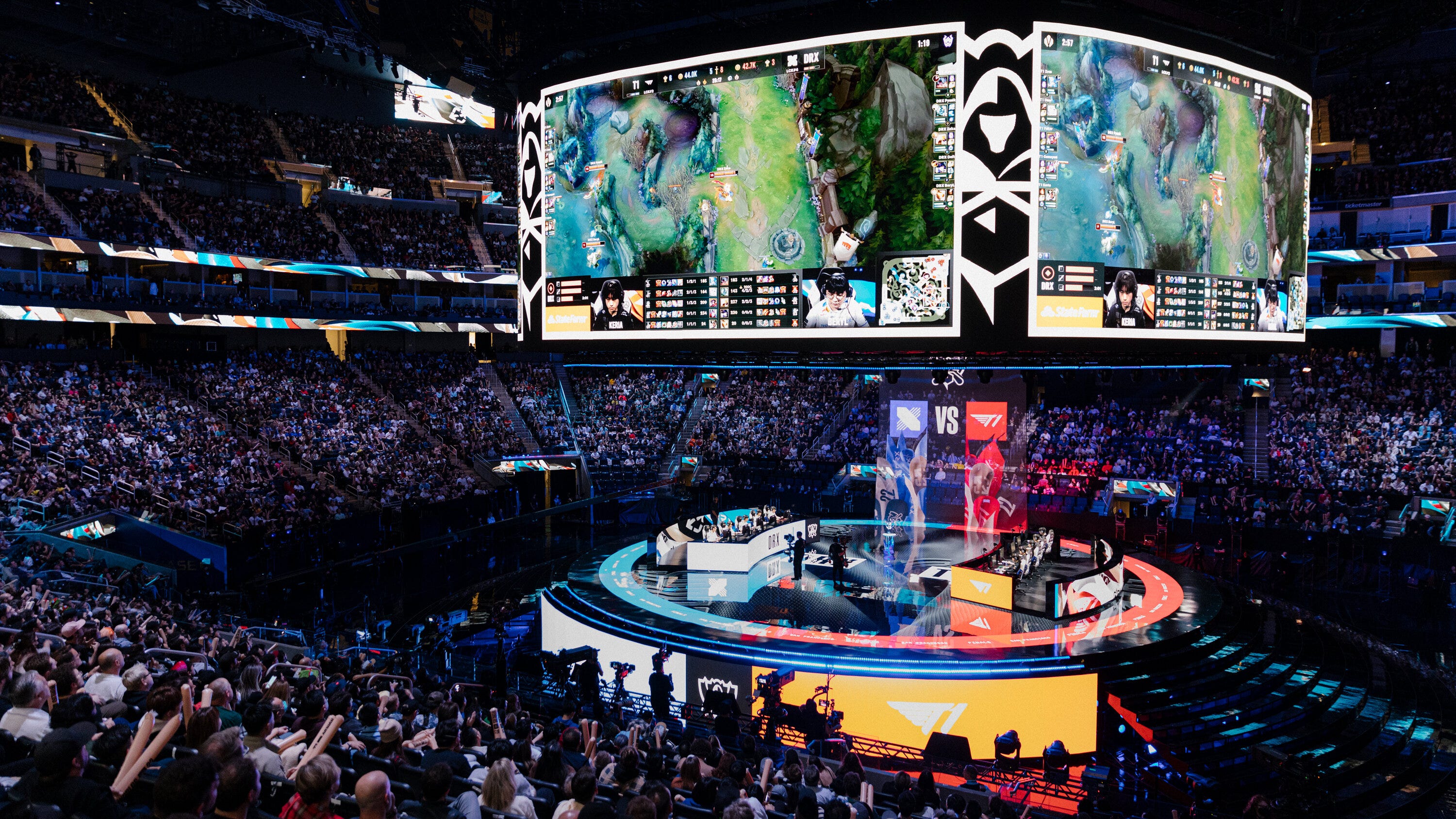
Without diving too deeply into metaphysical arguments distinguishing a thing itself (noumena) and the perception of a thing (phenomena), I’ll stay at the highest level and argue that, for all intents and purposes, our perception of a thing is the only reality that we know. While we may pride ourselves on our ability to differentiate the real from the artificial, e.g., professional basketball players from professional NBA2K players, increasingly, the line between the two is blurred. Both real basketball players and NBA2K players spend most of their waking lives thinking about and practicing their sport. Both types of players can support themselves in their career. Perhaps most importantly, both players’ brains release the same hormones upon a victory or a loss. The game each is playing, either on a physical court or a virtual screen, is equally as real to each player. Every day, existence in the material world is lessened as a requirement to produce a concrete, real perception in humans. We can see examples across domains: people are treated therapeutically by AI, Otaku game addicts spend their entire physical lives in virtual worlds, and we maintain certain social relationships exclusively via social media.
Our understanding of reality has long been conditional on physical existence - we believed that a thing must physically exist to be real; of late, technology has unequivocally demonstrated that we can perceive things that do not exist physically, and that the impact of these immaterial things can be commensurate with physically existing things.
In our lifetimes, we are witnessing a complete subsumption of reality into perception through technology. “Fake news” has shown to command a larger following than “real” news at times. Technology merely enables the hyper-efficient scaling and omnipresence of this effect, but our mind’s ability to conjure reality from perception has existed for as long as humans have had religion and a written/oral history. The underlying myths and foundations of human society scarcely required, or provided, physical existence. This raises the fundamental question: why does it matter if Jesus Christ existed as a person? Our perception (e.g., the image of Christ, the core message and teaching, and the Church itself) drives the real impact of Jesus Christ. Our perception of Christ is as real, or more real, to us than any historical existence or account. Perception is reality.